
PestoKill is a trusted home care and pest control service provider in Bengaluru, offering fast, safe, and professional pest management solutions for homes and businesses.
#57 Prerna Palazzo, 6th Cross Road, Ambalipura, Residency Road, Bengaluru - 560103
Pest Control for Pharmaceutical Manufacturing in Bengaluru
Validated, fully documented pest management for pharmaceutical facilities — engineered for GMP, Schedule M and regulatory inspection scrutiny.
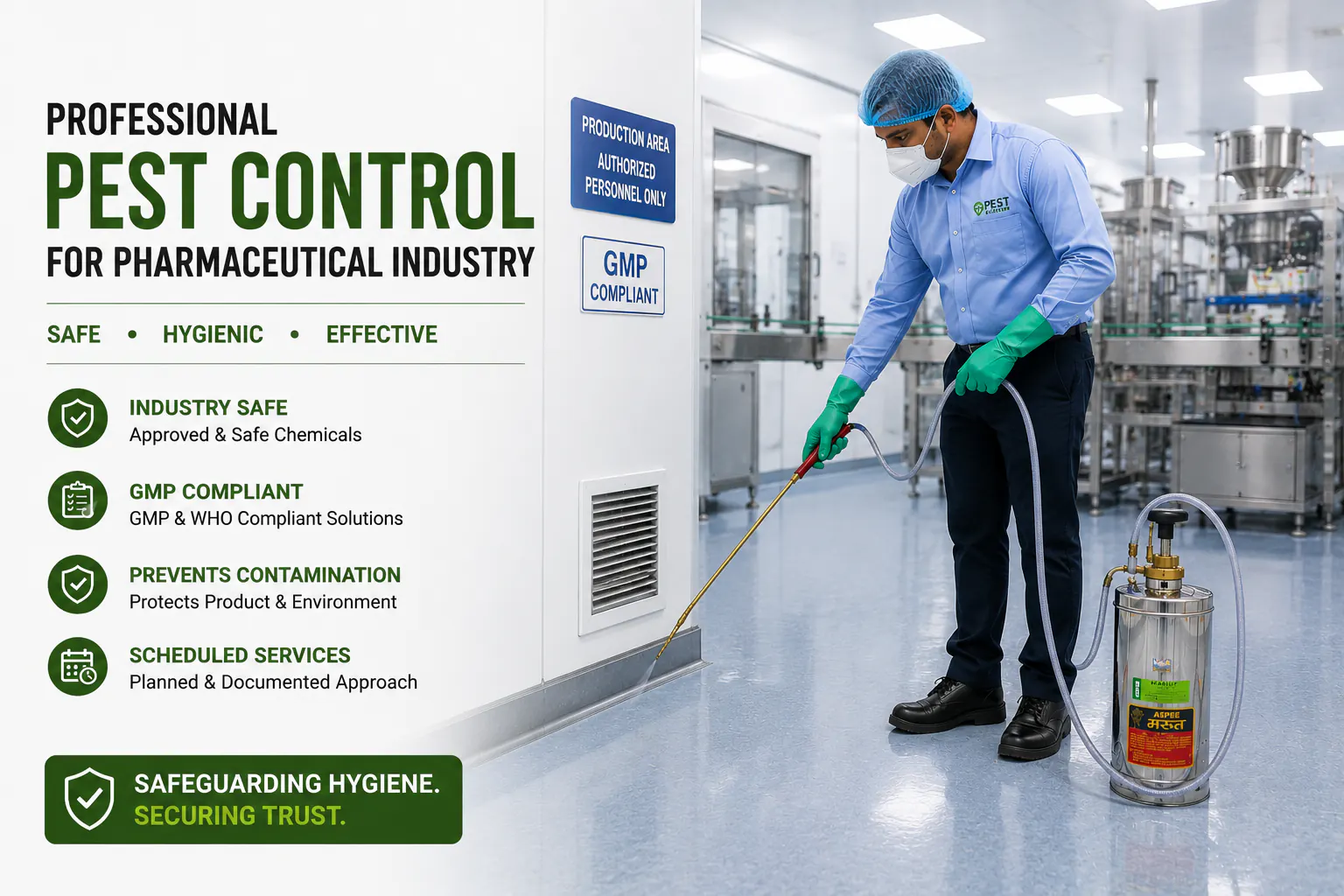
Why Pharmaceutical Manufacturing Need Specialist Pest Control
Pharmaceutical manufacturing has the least tolerance for pest activity of any sector. A single insect recovered inside a controlled area can invalidate a batch, trigger a deviation investigation and expose you to regulatory observations during a GMP inspection.
PestoKill delivers pest management built for regulated environments: no chemical application inside classified areas, sealed monitoring devices with reconciliation records, and documentation written to survive an auditor reading it line by line. Programmes are aligned to Schedule M and WHO-GMP expectations.
Pests That Threaten Pharmaceutical Manufacturing
The species we find most often in Pharmaceutical Manufacturing across Bengaluru, and what each one actually does to your operation.
Flying insects
Any insect entering a classified area is a deviation. Airlocks, gowning rooms and material transfer points need continuous monitoring.
Cockroaches
They exploit drains, service voids and utility corridors adjoining production suites.
Rodents
A rodent in a warehouse or utility area threatens raw material integrity and cabling, and is a critical audit finding.
Stored product insects
Excipients such as starch and lactose can carry insect activity into the plant through goods-in.
Birds
Roosting on air handling intakes risks drawing contaminants into the facility’s air supply.
What an Infestation Really Costs You
Pest activity in pharmaceutical manufacturing rarely stays a small problem. These are the consequences Bengaluru operators tell us they worry about most — and the reason a planned, documented programme always costs less than an emergency one.
- Batch rejection, deviation investigations and CAPA burden
- Regulatory observations during GMP or Schedule M inspection
- Loss of export approvals and customer audit failure
- Cross-contamination in classified and controlled areas
- Costly re-validation and remediation programmes
How Your Pharmaceutical Facility Pest Control Programme Works
A repeatable Integrated Pest Management cycle — survey, control, monitor, review — not a one-off spray.
-
1
Zone classification review
Devices and methods are assigned per area classification, with no chemical use inside classified zones.
-
2
Sealed device network
Numbered, tamper-evident monitors are installed to a validated plan and reconciled at every visit so nothing is unaccounted for.
-
3
Insect identification
Captures are identified to species level and trended, because the species tells you where the entry point is.
-
4
Entry-point engineering
We report on door seals, air curtains, drain traps and pressure differentials rather than treating symptoms.
-
5
Audit-grade documentation
Every visit produces records formatted for GMP review, with deviation support if activity is detected.
Audit-Ready Documentation, Handed Over Every Visit
Inspectors and auditors ask for records, not reassurance. The pest control file for your pharmaceutical facility is kept complete and current from day one, so an unannounced visit is never a scramble.
- Programme SOP and scope aligned to Schedule M
- Validated device layout with reconciliation records
- Species-level identification and trend reports
- Approved chemical list, MSDS and non-use declarations for classified areas
- Technician training, licensing and health records
- Deviation support documentation and CAPA input
Why Bengaluru Businesses Stay With Us
Same technicians, same standards, same paperwork — every single visit.
Government-approved
Licensed pest management with approved formulations only — nothing off-label, nothing unrecorded.
Verified technicians
Background-checked, uniformed and trained staff who understand working inside a live commercial site.
Low-odour & eco-friendly
Targeted, low-toxicity products chosen so staff, customers and stock are never put at risk.
Service around your hours
Night, early-morning and weekend slots so treatment never interrupts trading or production.
Documented every visit
Digital service reports, device maps, chemical records and treatment certificates on file.
24-hour response
Contract clients get a callout within 24 hours of reporting activity, at no extra charge.
Book a Free Pharmaceutical Facility Pest Inspection in Bengaluru
Tell us about your site and a PestoKill commercial specialist will survey it free of charge, then quote a programme scoped to your risk level — no obligation, no pressure. We cover all of Bengaluru including Koramangala, HSR Layout, Whitefield, Bellandur, Hebbal and Electronic City.
- Free on-site survey and written recommendation
- Programme scoped to your industry, not a generic package
- Service outside working hours on request
- Complete compliance documentation included
- 24-hour callout response for contract clients
Book Your Free Commercial Inspection
Share a few details and our team will get back to you within 24 hours.
Pharmaceutical Industry Pest Control — Your Questions Answered
The questions pharmaceutical manufacturing operators in Bengaluru ask us most often.
Other Sectors We Protect Across Bengaluru
Every programme is scoped to the sector it serves. Find yours below.
Protect Your Pharmaceutical Facility — Book a Free Survey
Book your free site survey today and get a written, industry-specific programme with the documentation your auditors expect.